VOC off-gassing from new furniture, paint, and flooring is a widely recognized concern, but a lot of assumptions about it don’t match how these compounds actually behave.
- Odor intensity is an imperfect indicator of actual VOC concentration.
- Off-gassing typically declines gradually over weeks to months, not resolved by a single day of airing out.
- VOC content relates to specific materials and manufacturing processes, not price point alone.
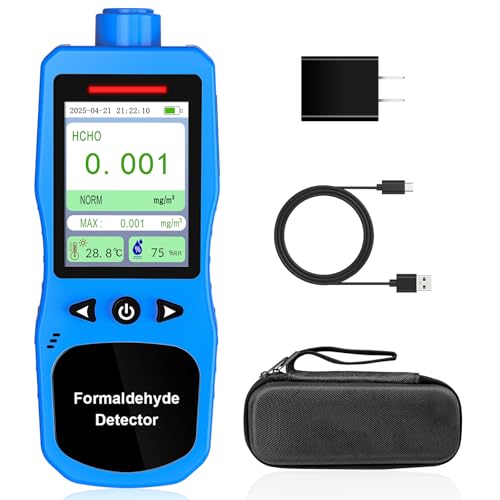
- Testing with a VOC monitor, not smell alone, gives an actual reading of current levels.
Myth: ‘New Smell’ Always Means High VOC Levels
The characteristic “new” smell in furniture, cars, and flooring does often correlate with VOC off-gassing, but odor intensity and actual VOC concentration don’t always match precisely — some higher-VOC materials have milder odors, and the reverse also occurs, making smell an imperfect (though not useless) initial indicator.
Myth: Airing Out New Furniture for a Day Solves the Problem
VOC off-gassing typically follows a curve — highest in the first days to weeks, then gradually declining over subsequent months, sometimes continuing at lower levels for a year or more depending on the specific material and compound. A single day of airing out addresses only the very initial, highest-concentration phase.
Myth: Only Cheap Furniture Off-Gasses
VOC content relates to specific manufacturing processes and materials (certain adhesives, finishes, pressed-wood products) rather than price point alone — some higher-priced items can still use VOC-emitting materials, while some budget items may use lower-VOC alternatives depending on the manufacturer’s specific choices.


Myth: An Air Purifier Handles VOCs the Way It Handles Dust
A filter that captures particles is doing a different job from one that captures gases. VOCs are gases, so they pass straight through a filter designed to trap dust, dander and smoke particles unless the unit also carries an adsorbent stage, usually activated carbon. A purifier can therefore make a room measurably cleaner in particle terms while doing very little to the VOC reading, which is a common source of confusion when a new machine does not move the number people expected it to move.
The practical version of this is to check what stages a unit actually has rather than what the box claims about air quality in general, and to treat the adsorbent stage as the part that is relevant to off-gassing. It is also why adsorbent capacity is consumed over time rather than blocked: unlike a particle filter, there is no visible loading and no change in airflow to signal that the stage has stopped contributing.
Myth: Natural, Organic or Plant-Based Means Low Emission
Marketing language describing a material as natural, green, organic or plant-derived says nothing standardized about what it emits indoors. Several of these words have no regulatory definition for building products and furnishings, so two items using the same word on the label can behave very differently in a room. Plant-derived solvents and finishes are still solvents and finishes, and some of them are strongly odorous.
The claim that carries information is a third-party emission certification naming the standard it was tested against, because that is a statement about measured emissions rather than about the origin of an ingredient. Where a product carries only a self-declared descriptive claim and no certifier is named, treat it as unverified rather than as evidence of low emission either way.
FAQ
If new furniture doesn’t smell strong, does that mean it’s low-VOC?
Not necessarily — odor intensity and actual VOC concentration don’t always correlate precisely. A VOC monitor gives a more reliable reading.
Do houseplants meaningfully lower indoor VOC levels?
The effect measured in sealed laboratory chambers has generally not scaled to the air exchange happening in an occupied room, so plants are best treated as pleasant rather than as a mitigation step. Ventilation and source control remain the levers that move a reading.
If a product is certified, does that mean it emits nothing?
No. Certification means measured emissions fell below that program’s threshold under its test conditions, not that emission is zero. It sets a documented ceiling, which is still considerably more than an uncertified product tells you.
This article addresses common misconceptions and is not a substitute for actual VOC/formaldehyde testing if you have specific health concerns.
These statements have not been evaluated by the Food and Drug Administration. This information is not intended to diagnose, treat, cure, or prevent any disease. Content is for informational purposes only and is not medical advice; consult a qualified healthcare provider before starting any supplement. As an Amazon Associate we earn from qualifying purchases.
