Your home’s specific ventilation options (windows, HVAC system type) affect which mitigation approaches are most practical.
- Limited-ventilation apartments may need to rely more heavily on portable air purification.
- Homes with flexible HVAC control can use fan-only mode for effective air exchange without opening windows.
- New construction with mechanical ventilation systems may offer more consistent built-in fresh-air exchange.
- Match your mitigation strategy to your specific home’s actual ventilation options and constraints.
Apartments and Limited-Ventilation Units
Units with limited window operability, no accessible HVAC fan-only control, or shared ventilation systems may need to rely more heavily on portable air purification, since active cross-ventilation options are more constrained than in a standalone house.
Houses With Flexible HVAC Control
Homes with an accessible, controllable HVAC system can use fan-only mode to circulate and exchange air more effectively even without opening windows, offering a mitigation option not always available in more constrained rental situations.

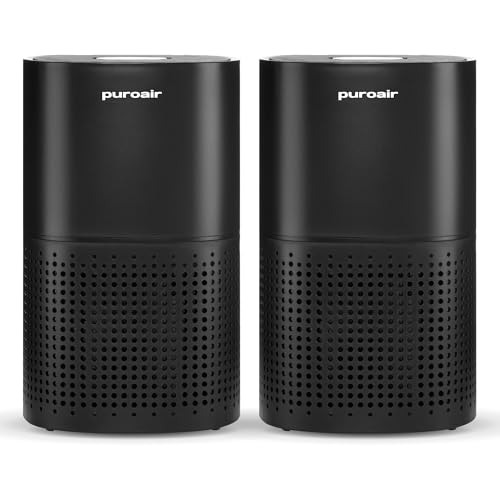
New Construction With Mechanical Ventilation
Newer homes with dedicated mechanical ventilation systems (ERV/HRV) may have more consistent, controllable fresh-air exchange built in, potentially reducing the reliance on manual window-opening for effective VOC mitigation.

Older Houses and the Ventilation Assumption
An older, leakier house is often assumed to ventilate itself, and in some conditions it does. The difficulty is that infiltration depends on wind and on the temperature difference between inside and out, so it largely disappears in mild weather, which is frequently the same weather in which nobody thinks to open a window either. The assumed ventilation is least available exactly when it is being relied on.
Older housing stock also more often lacks ducted exhaust in bathrooms and kitchens, or has fans that terminate in an attic rather than outside. Treat the leakiness as an unreliable variable rather than a built-in solution, and check where the exhaust fans you do have actually discharge, which is usually visible from outside the house.
Where the Source Sits Changes the Approach
An attached garage, a basement workshop, or a utility room storing paints, adhesives, solvents and fuels is a different problem from off-gassing spread evenly through a finished room. Where a source is concentrated in one space, the useful response is usually containment and exhaust at that space, plus attention to the door between it and the living area, rather than filtration in the rooms downstream.
In a multi-unit building the source may not be in your unit at all, and may not be something you can address with equipment. That is a conversation with building management rather than a purchase, and it is worth having in writing early, because filtration inside your own unit may reduce what reaches you while leaving the actual source untouched.
FAQ
What if my apartment doesn’t have good window ventilation options?
Rely more heavily on portable activated carbon air purification, and use any available exhaust fans or HVAC fan-only mode to supplement limited window ventilation.
Does an attached garage matter even if the door stays closed?
It can. The door between a garage and the house is a common pathway, so weatherstripping, self-closing hardware and not running a vehicle inside the space are worth attention alongside anything you do in the living areas.
What if the source seems to be in a neighboring unit?
Raise it with building management in writing and keep a dated record. Portable filtration in your own unit may reduce what reaches you, but it does not address a source you do not control.
Assess your specific home’s actual ventilation capabilities honestly rather than assuming a generic strategy applies uniformly.
These statements have not been evaluated by the Food and Drug Administration. This information is not intended to diagnose, treat, cure, or prevent any disease. Content is for informational purposes only and is not medical advice; consult a qualified healthcare provider before starting any supplement. As an Amazon Associate we earn from qualifying purchases.
