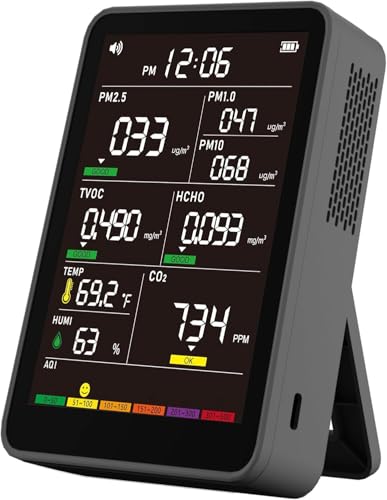
Many homeowners start with a store‑bought VOC test kit because it feels quick and inexpensive. These kits can give a rough snapshot of indoor air quality, but they often miss low‑level or intermittent sources that matter for long‑term exposure.
Understanding the limits of DIY sampling helps you decide when a certified professional should step in. This guide walks through the situations where professional testing adds value, what the process looks like, and how to budget for it.
- DIY kits give a quick snapshot but often miss low‑level or intermittent VOC sources.
- Professional testing uses longer sampling, calibrated equipment, and recognized protocols for more reliable data.
- Consider a professional when you have new construction, unexplained health symptoms, or a real‑estate transaction.
- Budget $400–$1,200 for a typical home assessment; request itemized quotes to compare value.
How DIY VOC Kits Work and What They Miss
Most consumer kits use a passive badge or a small pump that collects air for a few hours to a few days. The sample is then sent to a lab that reports total VOCs or a limited list of target compounds such as formaldehyde, benzene, or toluene.
Because the sampling period is short, the result reflects only the conditions during that window. Daily activities like cooking, cleaning, or opening windows can cause concentrations to swing dramatically, so a single snapshot may under‑ or over‑estimate the typical exposure.
DIY kits also tend to have higher detection limits than laboratory‑grade equipment. Very low concentrations that are still relevant for sensitive occupants — such as children, the elderly, or people with asthma — may fall below the kit’s reporting threshold.

When Professional Testing Provides Clearer Answers
A certified indoor air quality professional uses calibrated active samplers, real‑time monitors, and sometimes sorbent tubes that can run for 24 to 48 hours or longer. This extended sampling smooths out short‑term spikes and captures a more representative average.
Professionals can target a broader analyte list, including semi‑volatile organic compounds (SVOCs) and specific formaldehyde derivatives that DIY kits rarely measure. They also follow recognized sampling protocols such as EPA TO‑17 or ASTM D5197, which adds credibility to the data.
In addition to concentration numbers, a professional report usually includes source‑identification observations, ventilation assessments, and recommendations tailored to the building’s layout and occupancy patterns.

Key Scenarios That Call for a Professional
New construction or major renovation — fresh paint, adhesives, flooring, and cabinetry can release formaldehyde and other VOCs for weeks to months. A professional baseline test before occupancy helps verify that levels have dropped to acceptable ranges.
Persistent health complaints — if occupants experience headaches, eye irritation, or respiratory symptoms that improve when they leave the house, a thorough investigation can pinpoint whether VOCs are a contributing factor.
Real‑estate transactions — buyers and lenders increasingly request documented indoor air quality reports. A professional test with a chain‑of‑custody record satisfies disclosure requirements better than a DIY result.

What to Expect During a Professional Assessment
The visit typically starts with a walk‑through to note potential sources (e.g., pressed‑wood furniture, recent carpet installation, attached garage). The technician then places samplers in living areas, bedrooms, and any spaces where people spend the most time.
Sampling may run 24 to 48 hours for passive badges or up to a week for active pumps. Real‑time instruments can log minute‑by‑minute data, revealing peaks tied to specific activities such as cooking or using a fireplace.
After the sampling period, the lab analyzes the media and the professional prepares a report that compares results to guideline values from agencies like the EPA, WHO, or state health departments. The report also outlines mitigation steps, which may include increased ventilation, source removal, or air‑cleaning devices.
Cost Considerations and Budgeting Tips
A basic professional VOC and formaldehyde assessment for a single‑family home typically ranges from $400 to $1,200, depending on the number of sampling locations, duration, and the lab’s analyte list. Larger homes or multi‑unit buildings can push the price higher.
DIY kits cost $30 to $150 each, but you may need several kits to cover different rooms and time periods, and you still pay for lab analysis. When you factor in the time to interpret results and the risk of false confidence, the professional route can be more cost‑effective for high‑stakes situations.
Ask the contractor for a detailed quote that separates sampling labor, laboratory fees, and report preparation. Some firms offer package discounts for combined VOC, formaldehyde, and particulate testing, which can reduce the per‑test cost.

FAQ
Can a DIY kit replace a professional test for formaldehyde?
DIY kits can detect elevated formaldehyde, but their higher detection limits and short sampling windows mean they may miss chronic low‑level exposure that a professional assessment would capture.
How long does a professional VOC test take?
Sampling usually lasts 24 to 48 hours for passive methods or up to a week for active pumps; the full report is typically delivered within one to two weeks after the sampling period ends.
What certifications should I look for in an indoor air quality professional?
Look for the Certified Industrial Hygienist (CIH), which is awarded by the Board for Global EHS Credentialing (BGC, formerly ABIH) and not by the American Industrial Hygiene Association[1], or the Council‑certified Indoor Environmentalist (CIE) and Council‑certified Indoor Environmental Consultant (CIEC), both awarded by the American Council for Accredited Certification (ACAC)[2].
Each of those boards publishes its own roster of current certificants, so confirm a name with the issuing board rather than relying on a logo. The Indoor Air Quality Association (IAQA) is a membership association and does not award certifications, so IAQA membership is not itself a credential[3]. State‑licensed environmental consultants are another route.
Will a professional test guarantee that my home is safe?
No test can guarantee absolute safety; a professional assessment provides a detailed snapshot and expert recommendations, but ongoing ventilation, source control, and periodic re‑testing are part of a comprehensive strategy.

This article is for informational purposes only and does not constitute medical or legal advice; if you suspect a serious indoor air problem, consult a licensed indoor air quality professional or a healthcare provider for personalized guidance.
References
- Credentials and Designations: Certified Industrial Hygienist (CIH). Board for Global EHS Credentialing (formerly the American Board of Industrial Hygiene). https://gobgc.org/
- Indoor Air Quality Certification: Council-certified Indoor Environmentalist (CIE) and Council-certified Indoor Environmental Consultant (CIEC). American Council for Accredited Certification. https://www.acac.org/indoorairqualitycertification
- About IAQA. Indoor Air Quality Association. https://www.iaqa.org/about-iaqa
These statements have not been evaluated by the Food and Drug Administration. This information is not intended to diagnose, treat, cure, or prevent any disease. Content is for informational purposes only and is not medical advice; consult a qualified healthcare provider before starting any supplement. As an Amazon Associate we earn from qualifying purchases.