Volatile organic compounds (VOCs) and formaldehyde are present in nearly every home to some degree, released from building materials, furnishings, cleaning products, and everyday activities. While concentrations vary widely, understanding typical sources and the factors that drive higher levels can help homeowners make informed decisions about testing and mitigation.
This article outlines where these chemicals come from, what influences their indoor concentrations, and what research indicates about exposure reduction — without overstating risks or promising simple fixes. The goal is practical awareness, not alarm.
- VOCs and formaldehyde are nearly ubiquitous in homes; the question is concentration, not presence.
- New materials, poor ventilation, and warm/humid conditions drive the highest levels.
- Source control (low-emission products) is more effective than trying to remove chemicals after they off-gas.
- Ventilation and filtration reduce exposure, but evidence for homes is extrapolated from commercial building studies.
- Professional testing is recommended when odors persist, symptoms correlate with time at home, or after major renovations.
What Are VOCs and Formaldehyde?
VOCs are a broad class of carbon-based chemicals that evaporate at room temperature. Formaldehyde is a specific VOC widely used in resins, adhesives, and preservatives. Both can off-gas for months or years after installation or application. Common examples include benzene, toluene, xylene, and formaldehyde itself. Not all VOCs are equally toxic, and health effects depend on concentration, duration of exposure, and individual sensitivity.

Common Sources in Residential Settings
New or renovated homes often have the highest levels due to fresh materials. Pressed-wood products (particleboard, plywood, MDF) using urea-formaldehyde resins are a primary formaldehyde source. Other contributors include paints, varnishes, sealants, carpet adhesives, vinyl flooring, insulation, and cabinetry.
Household products — cleaners, air fresheners, disinfectants, cosmetics, and hobby supplies — add to the mix. Even cooking, smoking, and attached garages (vehicle exhaust, stored fuels) introduce VOCs. Older homes may have lower baseline levels but can still emit from aging materials or recent updates.
Factors That Influence Indoor Concentrations
Ventilation rate is the single most influential factor: tight, energy-efficient homes with low air exchange allow pollutants to accumulate. Temperature and humidity accelerate off-gassing — warmer, more humid conditions increase emission rates. The age of materials matters; emissions are highest when new and decline over time, though some products release low levels for years. Occupant behavior (product use, window opening, HVAC operation) creates day-to-day variability. Regional climate and building practices also affect typical indoor levels.

What Research Shows About Exposure and Mitigation
A modeling study of commercial buildings estimated that increasing ventilation alone is ineffective at reducing chronic health burdens, so source control and particle filtration should also be considered to reduce chronic health risks associated with indoor pollutants [1]. While that research focused on offices, schools, and retail spaces, the underlying physics — dilution and removal of airborne contaminants — applies to homes as well [3]. Direct, large-scale epidemiological data on VOC prevalence in U.S. residences is limited; most residential data comes from smaller studies or targeted investigations (e.g., after Hurricane Katrina or in FEMA trailers). Evidence is mixed on typical concentration ranges, and findings from one region or housing type may not generalize. Homeowners should treat published ranges as rough indicators, not guarantees.

Practical Steps to Assess and Reduce Exposure
Start with source control: choose low-emission products certified by programs like GREENGUARD Gold or FloorScore; for composite wood, look for the TSCA Title VI label, the federal standard that replaced CARB Phase 2 in March 2019[2]. During renovations, specify no-added-formaldehyde (NAF) or ultra-low-emitting formaldehyde (ULEF) materials. Increase ventilation mechanically (HRV/ERV, exhaust fans) and naturally (open windows when outdoor air quality permits), which consistently lowered indoor formaldehyde in measurements of new US homes, though source control remains the first step [3].
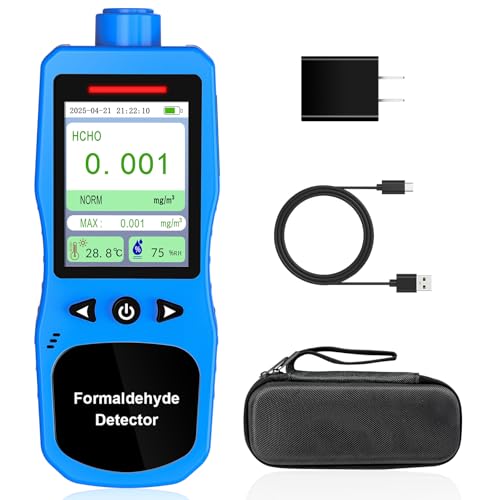
Use portable air cleaners with activated carbon filters for gas-phase removal — note that carbon saturates over time and requires replacement. For persistent concerns or unexplained symptoms, professional indoor air quality testing can identify specific compounds and guide targeted action. DIY test kits exist but vary in accuracy; they are best used as screening tools, not definitive assessments.
When Levels May Be Elevated: Red Flags
Strong chemical odors (especially after new construction, flooring installation, or furniture delivery), irritation of eyes, nose, or throat that improves when away from home, and recent major renovations or water damage (which can trigger microbial VOCs) warrant attention. Homes with attached garages, recent spray foam insulation, or extensive pressed-wood cabinetry may have higher baseline formaldehyde. If multiple occupants experience similar symptoms, or if a sensitive individual (asthma, chemical sensitivity) lives in the home, professional evaluation is prudent.
FAQ
Are VOC levels higher in new homes?
Yes. New construction and renovations introduce many fresh materials that off-gas most intensely in the first 6–12 months. Levels typically decline over time but can remain detectable for years.
Can houseplants meaningfully reduce VOCs?
Research shows plants remove negligible amounts in real-world room volumes. They are not a reliable mitigation strategy. Focus on ventilation and source control instead.
Does formaldehyde off-gassing ever stop completely?
Emissions decrease exponentially but may continue at low levels for the life of the product. Some older pressed-wood products still emit measurable formaldehyde decades later.
Should I test my home for VOCs?
Consider testing if you notice persistent chemical odors, have unexplained respiratory irritation that improves away from home, or recently completed major renovations. A qualified indoor air quality professional can design a targeted sampling plan.
This article provides general education only and does not constitute medical or legal advice. If you experience persistent health symptoms you suspect are related to indoor air quality, consult a healthcare provider. For comprehensive assessment, especially after renovations, water damage, or in homes with sensitive occupants, hire a licensed indoor air quality professional or industrial hygienist.
References
- Estimated effect of ventilation and filtration on chronic health risks in U.S. offices, schools, and retail stores. Indoor air, 2016
- Formaldehyde Emission Standards for Composite Wood Products. U.S. Environmental Protection Agency. https://www.epa.gov/formaldehyde/formaldehyde-emission-standards-composite-wood-products
- Formaldehyde and acetaldehyde exposure mitigation in US residences: in-home measurements of ventilation control and source control. Indoor air, 2015
These statements have not been evaluated by the Food and Drug Administration. This information is not intended to diagnose, treat, cure, or prevent any disease. Content is for informational purposes only and is not medical advice; consult a qualified healthcare provider before starting any supplement. As an Amazon Associate we earn from qualifying purchases.
