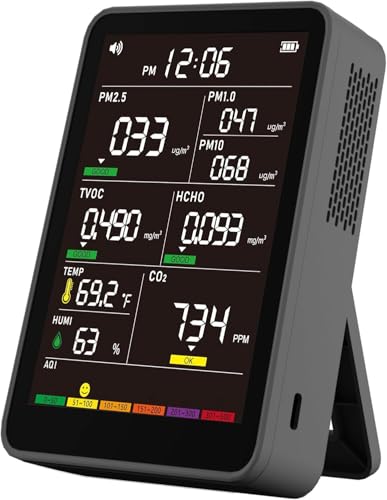
Homeowners increasingly turn to off‑the‑shelf test kits to check indoor air for volatile organic compounds (VOCs) and formaldehyde. These kits promise a quick snapshot of chemical levels without the cost of a full professional assessment.
While a kit can flag a potential problem, it cannot replace a comprehensive investigation. Understanding what the numbers mean — and where the data fall short — helps you decide whether to act on the results yourself or bring in a qualified indoor‑air specialist.
- DIY kits give a useful first look but only represent a short‑term snapshot of indoor air.
- Lab‑return kits with accredited analysis are more reliable than handheld sensor kits for quantitative results.
- Compare reported concentrations to relevant health‑based guidelines, but remember guidelines address chronic exposure, not a single 24‑hour sample.
- Sampling placement, duration, and detection limits heavily influence accuracy; follow instructions precisely.
- Elevated results or unexplained symptoms call for a professional indoor‑air assessment and a structured mitigation plan.
How DIY VOC and Formaldehyde Test Kits Work
Most consumer kits fall into two categories: passive sorbent badges that you leave in a room for a set period, and active pump‑based samplers that draw a known volume of air through a cartridge. After the sampling window — typically 24 to 48 hours — you seal the device and mail it to a laboratory for analysis, usually by gas chromatography‑mass spectrometry (GC‑MS) or high‑performance liquid chromatography (HPLC).
A smaller number of kits use colorimetric tubes or handheld electronic sensors that give an immediate reading. These provide a rough estimate in parts per billion (ppb) or micrograms per cubic meter (µg/m³) but lack the specificity and detection limits of lab‑based methods. The lab‑return kits generally report a list of target compounds (e.g., formaldehyde, benzene, toluene, xylenes) with concentrations and, in some cases, a comparison to common guideline values.
Because the sampling period is short, the result reflects a snapshot rather than an average over days or weeks. Ventilation, temperature, humidity, and recent product use can all shift concentrations dramatically during that window.


What the Results Actually Mean
A lab report will list each measured compound alongside a concentration value. Many kits also include a reference column citing guidelines such as the EPA’s Integrated Risk Information System (IRIS) reference concentrations, the World Health Organization (WHO) indoor air quality guidelines, or state‑level limits like California’s Proposition 65 safe harbor levels. These references help you gauge whether a reading is above a level that has been associated with health effects in long‑term exposure studies.
However, the presence of a compound above a guideline does not automatically indicate an immediate health risk. Guidelines are typically set for chronic (years‑long) exposure, while a single 24‑hour sample captures only a moment. Conversely, a reading below a guideline does not guarantee the space is free of concern, especially if the sampling missed peak emission periods.
Some reports provide a total VOC (TVOC) figure, which sums the concentrations of all identified compounds. TVOC is a screening metric, not a health‑based standard, because the toxicity of individual VOCs varies widely. Treat TVOC as a flag for further investigation rather than a definitive safety verdict.

Common Limitations and Sources of Error
Sampling duration is the biggest limitation. A 24‑hour badge cannot capture episodic spikes from activities like painting, cleaning, or cooking. If you sample on a day when windows are open, concentrations may be artificially low; sampling on a closed‑up day may overrepresent typical exposure.
Placement matters. Kits usually instruct you to hang the badge at breathing‑zone height (about 3–5 feet) away from direct airflow from vents, doors, or windows. Ignoring these instructions can bias the result enough to mislead you.
Laboratory detection limits vary. Some kits report “non‑detect” for compounds below the method detection limit (MDL), which may be higher than the most protective health guideline. A non‑detect result therefore does not prove absence; it only indicates the compound was below the kit’s analytical threshold.
Cross‑sensitivity in sensor‑based kits can cause false positives. For example, certain electrochemical sensors respond to both formaldehyde and other aldehydes, inflating the reported formaldehyde level. Always check the kit’s specification sheet for selectivity data.
Choosing a Kit: Features to Look For
Look for kits that use an accredited laboratory (ISO 17025) for analysis. Accreditation ensures the lab follows validated methods, participates in proficiency testing, and maintains traceable calibration standards.
Select a kit that targets the specific compounds you suspect. If you recently installed pressed‑wood furniture, a kit that includes formaldehyde and a panel of common VOCs (benzene, toluene, ethylbenzene, xylenes, styrene) is more useful than a generic TVOC‑only badge.
Check the reported detection limits against the guidelines you care about. For formaldehyde, a detection limit of ≤ 5 µg/m³ (≈ 4 ppb) is needed to compare meaningfully with the WHO 30‑minute guideline of 100 µg/m³ and the EPA’s chronic inhalation reference concentration for formaldehyde of 7 µg/m³ (0.007 mg/m³)[1].
Consider the turnaround time and cost. Lab‑return kits typically range from $80 to $250 per sample, with results in 5–10 business days. Sensor‑based kits cost $150–$400 upfront but give instant readings; however, they usually lack the analytical rigor of lab analysis.
Read the user reviews for ease of sampling, clarity of instructions, and quality of the final report. A well‑designed report will include raw concentrations, detection limits, guideline comparisons, and a plain‑language interpretation.
When to Bring in a Professional
If a DIY kit shows any target compound above a recognized guideline, or if the TVOC level is elevated without a clear source, a certified indoor‑air professional can conduct a more comprehensive assessment. Professionals use calibrated, continuous monitors that log data over days to weeks, capturing diurnal patterns and peak events.
Complex situations — such as multiple potential sources (new flooring, recent renovation, attached garage), persistent odors, or occupants experiencing respiratory irritation — warrant a full building‑science evaluation. This may include blower‑door testing, source‑identification sampling, and ventilation rate measurements.

Remediation decisions (e.g., sealing pressed‑wood, increasing mechanical ventilation, installing air cleaners) should be based on a thorough source‑control plan rather than a single snapshot. A professional can also verify that mitigation steps actually lower concentrations over time.
FAQ
Can a DIY test kit tell me if my home is safe?
A kit can indicate whether specific VOCs or formaldehyde are above certain reference levels at the time of sampling. It cannot guarantee overall safety because it misses temporal variability, unmeasured compounds, and long‑term exposure patterns.
How often should I retest after making changes?
Retest after any major source removal or ventilation upgrade, allowing at least 48 hours for the indoor environment to stabilize. For ongoing monitoring, consider a professional continuous monitor rather than repeated single‑use kits.
Are colorimetric tubes accurate enough for decision‑making?
Colorimetric tubes provide a rough estimate and are best used as a quick screening tool. Their precision is limited and they lack the compound specificity of lab analysis, so they should not be the sole basis for remediation decisions.
What should I do if the kit reports “non‑detect” for formaldehyde?
“Non‑detect” means the concentration was below the kit’s detection limit, not that formaldehyde is absent. If you suspect a source (e.g., new pressed‑wood), consider a kit with a lower detection limit or a professional assessment.
DIY test kits are screening tools, not definitive health assessments. If results exceed guidelines, odors persist, or occupants experience symptoms, consult a licensed indoor‑air quality professional for comprehensive testing and remediation planning.
References
- Formaldehyde CASRN 50-00-0 | IRIS | US EPA. U.S. Environmental Protection Agency, Integrated Risk Information System. https://cfpub.epa.gov/ncea/iris2/chemicalLanding.cfm?substance_nmbr=419
These statements have not been evaluated by the Food and Drug Administration. This information is not intended to diagnose, treat, cure, or prevent any disease. Content is for informational purposes only and is not medical advice; consult a qualified healthcare provider before starting any supplement. As an Amazon Associate we earn from qualifying purchases.