When you’re shopping for flooring, furniture, paint, or cabinetry, you’ll see a long list of certifications and labels claiming low emissions. Some are rigorous, third-party verified standards; others are manufacturer self-declarations with little oversight. Knowing which marks actually mean something can save you money and reduce the chance of bringing high-emitting products into your home.
This guide walks through the most common certifications you’ll encounter in North American retail channels, what they test for, and how to read the fine print. It’s practical guidance — not a guarantee — because certification programs evolve, testing conditions vary, and no single label covers every exposure scenario in a real home.
- Third-party certifications (FloorScore, GREENGUARD Gold, CARB/TSCA, Green Seal, CertiPUR-US, CRI Green Label Plus) provide verifiable emission limits; self-declared claims do not.
- Match the certification to the product category: composite wood needs CARB Phase 2 / TSCA Title VI; flooring and adhesives need FloorScore or GREENGUARD Gold; paint needs Green Seal GS-11 or GREENGUARD Gold; furniture foam needs CertiPUR-US; textiles need GOTS or Oeko-Tex.
- Always verify the certificate number in the certifier’s public directory — expired or revoked certificates are common.
- Certifications reflect lab conditions, not your installed environment; ventilation, temperature, humidity, and product combinations all affect real-world emissions.
- No single label covers every chemical of concern; combine certification screening with source control (ventilation, staging new materials off-site) for best results.
Why Certifications Matter for Indoor Air Quality
Volatile organic compounds (VOCs) and formaldehyde off-gas from many building materials, furnishings, and finishes. In a tight, energy-efficient home, those emissions can accumulate [1]. Third-party certifications exist to give buyers a standardized way to compare products, but the landscape is fragmented: different programs test different compound lists, use different chamber conditions, and set different pass/fail thresholds.
No certification eliminates off-gassing entirely. A “low-VOC” label means the product met a specific emission limit under specific test conditions — usually a small sample in a controlled chamber at 23°C and 50% relative humidity with a defined air exchange rate. Your installed product, in your climate, with your ventilation rate, may behave differently. Treat certifications as a screening tool, not a promise of zero emissions.
Major Third-Party Certifications for Building Materials
For hardwood flooring, engineered wood, laminate, insulation, and structural panels, the most widely recognized North American programs are FloorScore, GREENGUARD Gold, and CARB Phase 2 / TSCA Title VI compliance. FloorScore (administered by SCS Global Services) tests to California’s CDPH Standard Method v1.2 for VOC emissions in a classroom and office scenario. GREENGUARD Gold (UL Environment) uses a similar chamber method but adds lower total VOC limits and includes some additional chemicals. Both require annual factory audits and quarterly retesting.
CARB Phase 2 and the federal EPA TSCA Title VI regulation are mandatory for composite wood products (particleboard, MDF, hardwood plywood) sold in the U.S [2]. They set formaldehyde emission caps (e.g., 0.05 ppm for hardwood plywood) and require third-party certification and labeling. If you’re buying composite wood, look for a label stating “CARB Phase 2 Compliant” or “TSCA Title VI Compliant” with the certifier’s name and a lot number. For solid wood, formaldehyde is not a regulatory concern, but VOCs from finishes still apply.
Certifications for Furniture, Textiles, and Soft Goods
Upholstered furniture, mattresses, curtains, and carpet carry a different set of marks. GREENGUARD Gold appears here as well. BIFMA LEVEL (Business and Institutional Furniture Manufacturers Association) is a multi-attribute sustainability standard that includes VOC emission criteria aligned with ANSI/BIFMA X7.1 and CDPH v1.2. For mattresses, CertiPUR-US covers flexible polyurethane foam — it bans certain flame retardants, heavy metals, and phthalates, and sets VOC emission limits (<0.5 mg/m³ total VOCs). Global Organic Textile Standard (GOTS) and Oeko-Tex Standard 100 address textile processing chemicals; they include some VOC limits but focus more on restricted substance lists.

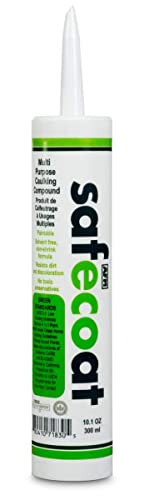
Carpet and rug certifications include CRI Green Label Plus (Carpet and Rug Institute), which tests to CDPH v1.2 for VOCs and requires ongoing verification. For adhesives and sealants used in installation, look for SCAQMD Rule 1168 compliance or GREENGUARD Gold on the adhesive itself — the substrate certification doesn’t cover the glue.
Paint, Coatings, and Wet-Applied Products
Paint labels are crowded with claims. The most meaningful VOC-related marks are GREENGUARD Gold, Green Seal GS-11, and Master Painters Institute (MPI) Green Performance Standard. Green Seal GS-11 sets VOC content limits (grams per liter) and bans certain chemicals; it also requires emission testing per CDPH v1.2.
MPI Green Performance includes VOC content limits and durability testing. Note: VOC content (what’s in the can) is not the same as VOC emissions (what comes off the wall). A low-VOC-content paint can still emit exempt solvents or reaction byproducts.
For stains, sealers, and clear coats, look for the same third-party emission certifications. Many “zero-VOC” colorants added at the tint desk can raise the final VOC content and emissions. Ask for the technical data sheet (TDS) and safety data sheet (SDS) for the base and the colorant, and verify the certification applies to the tinted system, not just the white base.
How to Read Labels and Verify Claims
A legitimate certification label includes: the program name and logo, the certifier’s name (e.g., SCS, UL, Intertek), a certificate number or license number, and often a QR code or URL to a public certificate directory. If a product says “low VOC” with no certifier, no standard reference, and no certificate number, treat it as marketing language. You can search the certifier’s online directory (SCS Certified Green Products Guide, UL SPOT, Green Seal Find Certified Products) by certificate number or manufacturer name to confirm current status.
Check the standard version cited. CDPH Standard Method v1.2 (2017) is current; v1.1 is outdated. GREENGUARD Gold certificates list the specific standard (e.g., UL 2818). CARB/TSCA labels must show the fabricator name, production date, and “Phase 2” or “TSCA Title VI.” If the label is missing any of these, ask the retailer or manufacturer for the full certificate before buying.
Red Flags and Marketing Terms to Question
Terms like “eco-friendly,” “green,” “non-toxic,” “natural,” and “chemical-free” have no regulatory definition for building products. “No added formaldehyde” (NAF) or “ultra-low emitting formaldehyde” (ULEF) are legitimate CARB/TSCA designations for composite wood, but they don’t address other VOCs. “Zero VOC” on paint usually means <5 g/L per EPA Method 24 — but exempt solvents (acetone, parachlorobenzotrifluoride) don't count toward that number and may still emit.

Self-declared “complies with” statements without a third-party certifier’s name are not equivalent to certification. Proprietary “green” labels created by a manufacturer or retailer (e.g., “Brand X Eco Choice”) should be backed by a public standard and independent verification — if they’re not, they’re internal marketing. When in doubt, request the test report summary or certificate from the certifier, not the manufacturer.


FAQ
Does a GREENGUARD Gold label mean the product has zero formaldehyde?
No. GREENGUARD Gold sets an emission limit for formaldehyde (≤ 7.3 µg/m³ in the modeled bedroom scenario) and for total VOCs, but it does not require zero formaldehyde. The product still emits at low levels; the certification means those levels are below the program’s thresholds under test conditions.
Is CARB Phase 2 the same as TSCA Title VI?
They are aligned but not identical. CARB Phase 2 is California’s regulation; TSCA Title VI is the federal EPA rule that largely mirrors CARB Phase 2 with some administrative differences. A panel labeled “CARB Phase 2 Compliant” and “TSCA Title VI Compliant” meets both. Look for both statements or the TSCA Title VI label for products sold nationwide.
Can I trust a ‘low-VOC’ claim on a paint can without a certification logo?
Not reliably. ‘Low-VOC’ without a cited standard (e.g., Green Seal GS-11, MPI Green Performance) and a third-party certifier is an unverified marketing claim. Request the technical data sheet and look for a VOC content number (g/L) and a reference to a recognized standard.
Do certifications cover installation adhesives and sealants?
Only if the adhesive or sealant itself carries a certification (e.g., GREENGUARD Gold, SCAQMD Rule 1168 compliant). The flooring’s FloorScore certificate does not cover the glue. Specify low-emitting adhesives separately and verify their certifications.
How often do certifications expire or get revoked?
Most programs require annual surveillance audits and periodic retesting (often quarterly). Certificates have expiration dates. Always check the certifier’s online directory for current status before specifying or purchasing.
This article provides general consumer guidance based on publicly available certification program rules as of publication; program requirements change and real-world emissions vary by installation, ventilation, and product combinations. For health concerns, persistent odors, or large-scale renovations, consult a qualified indoor environmental professional (e.g., CIH, CIEC) who can conduct on-site testing and interpret results for your specific situation.
References
- Introduction to Indoor Air Quality. U.S. Environmental Protection Agency
- Formaldehyde Emission Standards for Composite Wood Products. U.S. Environmental Protection Agency
These statements have not been evaluated by the Food and Drug Administration. This information is not intended to diagnose, treat, cure, or prevent any disease. Content is for informational purposes only and is not medical advice; consult a qualified healthcare provider before starting any supplement. As an Amazon Associate we earn from qualifying purchases.
