Many homeowners notice a chemical smell after painting, installing new flooring, or bringing in fresh furniture. That odor often comes from volatile organic compounds (VOCs) and formaldehyde that slowly release into indoor air.
This guide walks through the main product categories that can help lower those emissions, what certifications to trust, typical price ranges, and when it makes sense to bring in a professional for testing or remediation.
- Source control (low‑VOC paints, certified composite wood) yields the greatest reduction per dollar.
- Ventilation — especially an HRV/ERV — provides consistent dilution and is the backbone of any long‑term strategy.
- Activated‑carbon air purifiers help with residual VOCs but require regular filter changes and cannot replace source removal.
- Passive sorbents and houseplants offer limited, short‑term benefit; treat them as supplements only.
- Third‑party certifications are the most reliable way to compare products across brands.
Source‑Control Products: Low‑VOC Paints, Sealants, and Adhesives
The most effective way to cut off‑gassing is to stop it at the source. Low‑VOC or zero‑VOC interior paints are widely available and typically cost $30–$70 per gallon, comparable to conventional latex. Look for products that meet the Green Seal GS‑11 standard or carry the GREENGUARD Gold label — but note these are two different kinds of limit.
GS‑11 caps the VOC content of the paint in the can (grams per litre), while GREENGUARD Gold caps how much formaldehyde and total VOC the finished product emits into the air under chamber testing (micrograms per cubic metre). Check the specific certificate rather than assuming a single number covers both.
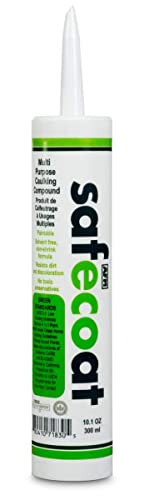
Water‑based sealants and adhesives for wood, tile, and countertop work follow the same principle. A low‑VOC polyurethane sealant runs $15–$30 per quart, while a formaldehyde‑free construction adhesive is usually $8–$12 per tube. When shopping, check the technical data sheet for a VOC content listed in grams per liter and confirm that the product is certified by an independent third party rather than relying on a manufacturer’s claim alone.


Flooring and Cabinetry That Meet Formaldehyde Emission Standards
Engineered wood products — plywood, particleboard, MDF, and laminate flooring — are common formaldehyde sources. The California Air Resources Board (CARB) Phase 2 and the EPA’s TSCA Title VI rule set formaldehyde emission limits that differ by product type rather than a single figure: 0.05 ppm for hardwood plywood, 0.09 ppm for particleboard, 0.11 ppm for medium-density fiberboard and 0.13 ppm for thin MDF, measured by ASTM E1333[1][2]. Products labeled CARB 2 compliant or TSCA Title VI certified generally cost 10–20 % more than non‑certified equivalents, but they provide a verified ceiling on emissions.
Solid‑wood flooring and cabinetry avoid the resin binders that release formaldehyde, though they carry a higher upfront price ($5–$12 per square foot for hardwood versus $2–$5 for laminate). If budget forces a composite choice, ask the supplier for a recent third‑party test report (e.g., from an ISO‑17025 accredited lab) rather than accepting a generic compliance statement.
Air‑Cleaning Devices: Activated‑Carbon Filters and Photocatalytic Oxidizers
Portable air purifiers with a substantial activated‑carbon bed (at least 5 lb of carbon) can adsorb a portion of airborne VOCs and formaldehyde. Expect to pay $150–$400 for a unit rated for 300–500 sq ft, plus $30–$60 per year for carbon replacement. Performance varies with humidity, temperature, and the specific chemical mix, so treat these devices as a supplement to source control, not a stand‑alone solution.
Photocatalytic oxidation (PCO) units claim to break down VOCs using UV light and a titanium‑dioxide catalyst. Independent lab data are mixed; some studies show modest reductions for certain aldehydes, while others note the formation of by‑products such as ozone. If you consider a PCO device, verify that it is UL‑listed for ozone emissions below 0.05 ppm and budget $250–$600 for the hardware.

Ventilation Upgrades: Exhaust Fans, Heat‑Recovery Ventilators, and Simple Air‑Exchange Habits
Increasing the rate at which outdoor air replaces indoor air is the most reliable way to dilute off‑gassing. A bath‑room exhaust fan rated at 80–110 CFM costs $40–$120 installed; a kitchen range hood of 300–600 CFM runs $150–$400. For whole‑house dilution, a heat‑recovery ventilator (HRV) or energy‑recovery ventilator (ERV) supplies 0.35–0.5 air changes per hour and typically costs $1,200–$2,500 installed, with modest operating costs.
Low‑cost habits, such as opening windows for 10 to 15 minutes twice daily, using the fan‑on setting on the HVAC system, and running bathroom fans during and after showers, lower indoor VOC concentrations by diluting indoor air with outdoor air. These steps require no purchase and are worth establishing before investing in mechanical equipment.
Sorbent Materials and DIY Absorbers: Zeolite, Activated‑Charcoal Bags, and Houseplants
Zeolite granules and activated‑charcoal bags are marketed as passive VOC absorbers. A 2‑lb zeolite pack costs $15–$25 and can be placed in closets or near new furniture. Laboratory tests show they can capture a measurable fraction of formaldehyde under controlled conditions, but real‑world effectiveness drops quickly as the sorbent saturates, usually within 30–60 days in a typical room.
Houseplants such as spider plant, peace lily, and Boston fern are often cited for air‑cleaning ability. The NASA Clean Air Study demonstrated removal of certain VOCs in sealed chambers, yet the plant‑to‑air volume ratio required for a noticeable effect in a home is impractically high (dozens of plants per 100 sq ft). Treat plants as a pleasant addition, not a primary mitigation strategy.
Evaluating Cost vs. Benefit and Making a Purchase Plan
Start by identifying the biggest sources in your home — recent paint, new carpet, pressed‑wood furniture — and allocate budget to replace or seal those first. A typical whole‑house approach (low‑VOC paint for 2,000 sq ft, CARB‑2 laminate flooring, a mid‑range HRV, and a carbon‑filter purifier for the main living area) can run $4,000–$7,500, spread over several months.
Prioritize products with third‑party certification (GREENGUARD Gold, FloorScore, CARB 2, TSCA Title VI) because they provide a documented emission ceiling. Keep receipts and certification sheets; they are useful if you later need professional testing to verify that indoor levels have dropped.
FAQ
Do low‑VOC paints completely stop formaldehyde release?
Low‑VOC paints dramatically reduce the amount of VOCs and formaldehyde emitted during and after application, but they do not guarantee zero emissions. Residual formaldehyde can still off‑gas from substrates or from the paint film at very low levels.
How often should I replace the carbon filter in an air purifier?
Most manufacturers recommend replacing the activated‑carbon filter every 6–12 months, or sooner if you notice a return of odors. In homes with strong off‑gassing sources, plan on the shorter end of that range.

Is an HRV worth the cost for a small apartment?
An HRV provides balanced, filtered fresh air year‑round, which is valuable in tight, energy‑efficient apartments. If installation cost is prohibitive, a high‑CFM exhaust fan combined with scheduled window opening can achieve similar dilution at lower expense.
Can I test formaldehyde levels myself reliably?
Consumer‑grade passive badge kits give a rough snapshot (typically ±20 % accuracy) and are useful for screening. For definitive results — especially if you have health concerns — hire a certified indoor‑air professional who uses calibrated active sampling methods.
This guide provides general product information and cost ranges; it does not replace professional indoor‑air testing or remediation. If you experience persistent respiratory irritation, headaches, or if a screening test shows formaldehyde above 0.1 ppm, consult a licensed indoor‑air quality specialist or a certified industrial hygienist. Treat 0.1 ppm (roughly 123 µg/m³) as a short-term screening trigger rather than a safe long-term level: EPA’s chronic inhalation reference concentration for formaldehyde is 0.007 mg/m³ (7 µg/m³), about seventeen times lower.[3]
References
- 40 CFR 770.10 — Formaldehyde emission standards. Electronic Code of Federal Regulations. https://www.ecfr.gov/current/title-40/chapter-I/subchapter-R/part-770/subpart-C/section-770.10
- Formaldehyde Emission Standards for Composite Wood Products | US EPA. U.S. Environmental Protection Agency. https://www.epa.gov/formaldehyde/formaldehyde-emission-standards-composite-wood-products
- Formaldehyde CASRN 50-00-0 | IRIS | US EPA. U.S. Environmental Protection Agency, Integrated Risk Information System. https://cfpub.epa.gov/ncea/iris2/chemicalLanding.cfm?substance_nmbr=419
These statements have not been evaluated by the Food and Drug Administration. This information is not intended to diagnose, treat, cure, or prevent any disease. Content is for informational purposes only and is not medical advice; consult a qualified healthcare provider before starting any supplement. As an Amazon Associate we earn from qualifying purchases.
