VOC prevention technology has evolved significantly, both in material formulation and monitoring capability.
- Newer low-emission material formulations increasingly match standard products in durability and cost.
- Smart multi-sensor monitors combine VOC with other air quality metrics in one device.
- ERV/HRV systems address the historic tension between energy-efficient sealing and adequate ventilation.
- These technologies make VOC prevention increasingly accessible and effective for both new and existing homes.
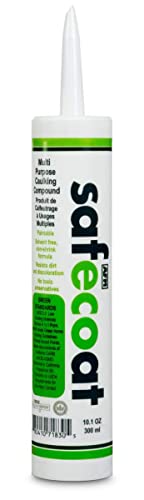
Advanced Low-Emission Material Formulations
Newer paint, adhesive, and composite wood formulations continue to reduce VOC content while maintaining performance characteristics, making low-VOC choices increasingly comparable to standard alternatives in durability and cost.
Smart Multi-Sensor Air Quality Monitors
Newer consumer monitors combine VOC/TVOC sensing with formaldehyde-specific, PM2.5, and CO2 sensors in a single device, connecting to smartphone apps for comprehensive real-time air quality tracking beyond VOCs alone.
Energy Recovery Ventilation Systems
Newer ERV/HRV systems for both new construction and retrofit applications provide consistent, energy-efficient fresh-air exchange, addressing the historic tension between energy-efficient sealing and adequate ventilation for VOC management.


How to Verify a Low-Emission Claim
The meaningful development in materials is not the marketing language, it is that independent certification programmes now cover most of the categories that matter in a home. For composite wood, the federal formaldehyde standard under TSCA Title VI brought national requirements into line with the California CARB programme, so panel goods and the furniture built from them carry a compliance label rather than a vague reassurance.
Product emissions certifications go a step further by testing an assembled item in a chamber and reporting what it actually releases, which is a different and more relevant measurement than the VOC content of the liquid that went into it.
The habit worth forming is to look for the certification mark together with the product category it was issued for, rather than the adjective on the packaging. A certification covering flooring says nothing about the adhesive used to install it, and a label on a base material says nothing about a finish applied later. Where a product carries no certification at all, that is not evidence of a problem, but it does mean its emission behaviour is unknown to you and worth treating as unknown.
What These Technologies Do Not Replace
It is worth being precise about what each category actually does. A monitor measures and changes nothing about the air. A ventilation system dilutes and exchanges, reducing concentration without reducing emission. Only the material choice reduces how much is released in the first place. They complement each other rather than substituting for one another, and the order matters when a budget is limited, because a lower-emission material keeps working with no power, no filters and no attention, while the other two work only while they are running and maintained.
FAQ
Is a monitor with more sensors a better prevention tool?
More sensors give you more context, which helps with diagnosis, but no monitor prevents anything by itself. Its value is telling you whether a change you made worked. If the choice is between a better monitor and a lower-emission material for the same room, the material is the one doing prevention.
Are ERV/HRV systems available for existing homes, not just new construction?
Yes — retrofit ERV/HRV systems are available for existing homes, providing consistent fresh-air exchange without requiring extensive window operation.
New technology improves prevention capability but doesn’t eliminate the value of basic practices like active ventilation after new material introduction.
These statements have not been evaluated by the Food and Drug Administration. This information is not intended to diagnose, treat, cure, or prevent any disease. Content is for informational purposes only and is not medical advice; consult a qualified healthcare provider before starting any supplement. As an Amazon Associate we earn from qualifying purchases.
