Some VOC prevention claims sound plausible but don’t match how off-gassing actually works. Here’s what to skip.
- Scented products mask odor without reducing actual VOC concentration.
- Off-gassing continues over weeks to months, not resolved by a single day of ventilation.
- Houseplants show some effect in controlled lab studies, but impractical quantities are needed for meaningful home-scale reduction.
- Active ventilation and appropriate air purification remain the practical, effective approaches.
Myth: Scented Candles or Air Fresheners Neutralize VOCs
Scented products mask odor without reducing actual VOC concentration, and can introduce additional VOCs of their own — this is a counterproductive approach, not a genuine prevention or mitigation method.
Myth: A Single Day of Airing Out New Furniture Is Sufficient
Off-gassing typically continues over weeks to months following the highest-initial-days curve — a single day of ventilation addresses only the very beginning of this process, not the full timeline.
Myth: Houseplants Meaningfully Reduce VOC Levels at Home Scale
While certain plants have shown some VOC-filtering capability in small, controlled lab studies, the number of plants required to meaningfully affect VOC levels at typical room or home scale is generally considered impractically large for most households.


Myth: If You Cannot Smell It, the Off-Gassing Has Stopped
Smell is the most common way people decide a new item has finished off-gassing, and it is among the least reliable. Odour thresholds vary enormously between compounds. Some VOCs are detectable by nose far below any level of concern, which makes a mild smell feel more alarming than it is. Others have odour thresholds at or above the point where they cause irritation, so a room can be worth ventilating while smelling like nothing at all.
A second effect works against you. Your sense of smell fades to a constant background odour within minutes of entering a room, which is why visitors notice something that residents stopped registering weeks ago. Between compound-to-compound variation and your own adaptation, the nose reports that something changed, not how much of it is in the air.
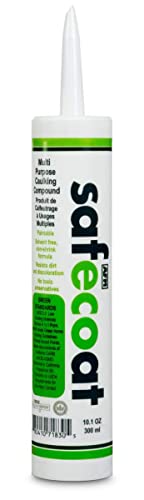
Myth: A Zero-VOC Label Means the Finished Product Emits Nothing
Low-VOC and zero-VOC on a paint can are content claims about the liquid in the container, and they exist largely because outdoor air quality rules limit the solvents that contribute to smog. That is a different question from what the dried coating releases into your room, and a different list of compounds, since several substances are excluded from the regulatory definition.
Tinting widens the gap further, because content claims usually describe the base before colorant is added at the point of sale. None of this makes low-VOC paint a poor choice. It means the label is a reason to prefer a product, not a reason to skip ventilating after you use it.
FAQ
If a new item still smells faintly after several weeks, has something gone wrong?
Usually not. Emission rates fall fastest in the first days and then decline slowly, so a faint residual smell well into the process is ordinary rather than a sign of a defective product. Direction is what matters. A smell that is clearly weaker month over month is behaving as expected, while one that has not faded at all is worth treating as a specific source to find.
Do houseplants really clean VOCs from my home’s air?
Lab studies show some effect at small scale, but the number of plants needed for meaningful whole-room or whole-home reduction is generally considered impractical for most households.
Don’t substitute unproven or impractical methods for active ventilation and appropriate air purification.
These statements have not been evaluated by the Food and Drug Administration. This information is not intended to diagnose, treat, cure, or prevent any disease. Content is for informational purposes only and is not medical advice; consult a qualified healthcare provider before starting any supplement. As an Amazon Associate we earn from qualifying purchases.
